“Almost 2,000 people, most of them veterans and active-duty service members suffering from the flashbacks, nightmares and anxiety of PTSD, have taken the workshop by Project Welcome Home Troops .”
“A Stanford research study found the Sudarshan Kriya Yoga breathing program reduced post-traumatic stress disorder and anxiety in Iraq and Afghanistan veterans.”
“Newly published research by Stanford scholar Emma Seppala shows how meditation and breathing exercises can help military veterans recover from post-traumatic stress disorder.”
“Hard core military guys and yoga – that doesn’t really… go together does it?” people have asked. It’s true that, when they first walked into the study, the young, tattoo-covered, hard-drinking, motorcycle driving men that participated in my study did not look like your typical yoga studio regulars. But their words after participating in our study said it all: “Thank you for giving me my life back.” “I feel like I’ve been dead since I returned from Iraq and I feel like I’m alive again.”
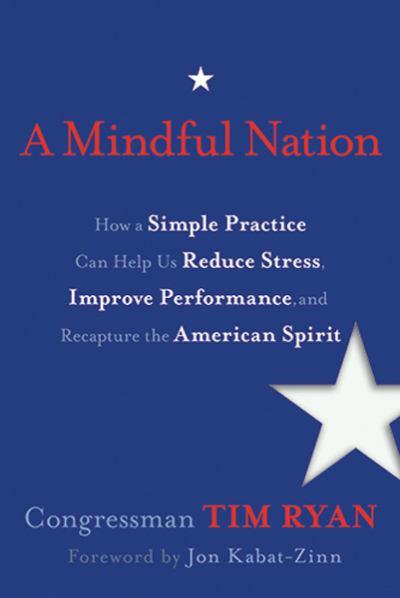
Congressman Tim Ryan’s new book promotes the use of yoga and meditation-based practices for returning veterans and highlights research happening on the PWHT workshop conducted at the University of Wisconsin-Madison
Countless stories in history of individuals overcoming some of the most extreme hardships are the result of a resilient brain. Project Welcome Home Troops is working to improve the quality of life for thousands of veterans in America through their resilience building program.
Cheers to America’s new push-up for the brain! With all the scientific evidence coming in over the years, meditation is now becoming a practice that anyone from any walk of life can embrace.
“Research by Stanford scholar Emma Seppala at the Center for Compassion and Altruism Research and Education found that post-traumatic stress disorder decreased in veterans who participated in a weeklong breathing, yoga and meditation workshop, and remained lower a year later.”
“For these veterans, healing trauma was as simple as learning how to breathe.”
The human brain is one of the most resilient and sophisticated pieces of matter in the universe. Countless stories in history of individuals overcoming some of the most extreme hardships are the result of a resilient brain. Project Welcome Home Troops is working to improve the quality of life for thousands of veterans in America through their resilience building program.
“We take our breath for granted, but learning to breathe can change our life.”
“Military people don’t want to be seen as victims, they’re so brave,” Seppala said. “They’re not always open to therapy because they hate the victim status, so we want to give them practices to empower them with tools they can use to help themselves.” A year later, Low, 30, sums up his experience with two words: “It works.” Wisconsin State Journal
“We know that memory is very malleable. What I think is happening is the association between trauma and memory change – they remember what happened, but it’s no longer present and now,” said Seppala, associate director at the Center for Compassion and Altruism Research and Education at Stanford University.
At the newly created Center for Investigating Healthy Minds, prominent neuroscientist Richie Davidson and his team try to see how far our minds can go and how many ways meditation can help us.
“Those veterans with [Post-Traumatic Stress Disorder] who went through it had improved sleep, improved post-traumatic stress disorder, improved anxiety, [and] improved spatial working memory,” Seppala said.
Or, in less scientific terms, the course had the potential to improve the quality of life for veterans.

Veterans with post traumatic stress syndrome who participated in early studies told Seppala that the breathing exercises helped them feel calm for the first time they could remember.
“We’re interested in determining if simple practices can be brought into the schools to improve students’ concentration and skill in emotion regulation . . . both of which are necessary for kids to be successful,” said Davidson.
Studies suggest that this practice modulates the stress response.
“It’s helping to shift their perception. The shame, the guilt, the remorse—whatever they’re feeling as a result of moral injury,” says Moore. “They’re able to reframe what they did or what they experienced and begin to experience forgiveness for themselves, for the military, even for God.”
Stress has a rotten reputation—but not all of it is bad. The “good” kind gets you across the street quickly when you see an oncoming vehicle, or it motivates you to work towards a deadline.Your body enters self-protection mode and puts you in tip-top shape: your immune system, heart rate, attention and memory all gear up for survival.